JAPANAN 日本語
Native Speaker Kanji Series

8 strokes
金 (gold)
Core Meaning
gold · money · metal
かね(名)
音読み On-yomi
キン・コン
- 金曜日きんようびFriday
- 金色きんいろgolden colour
- 料金りょうきんfee / charge
訓読み Kun-yomi
かね
- お金おかねmoney
- 金持ちかねもちwealthy person
- 金回りかねまわりfinancial situation
Etymology — pictographic origin
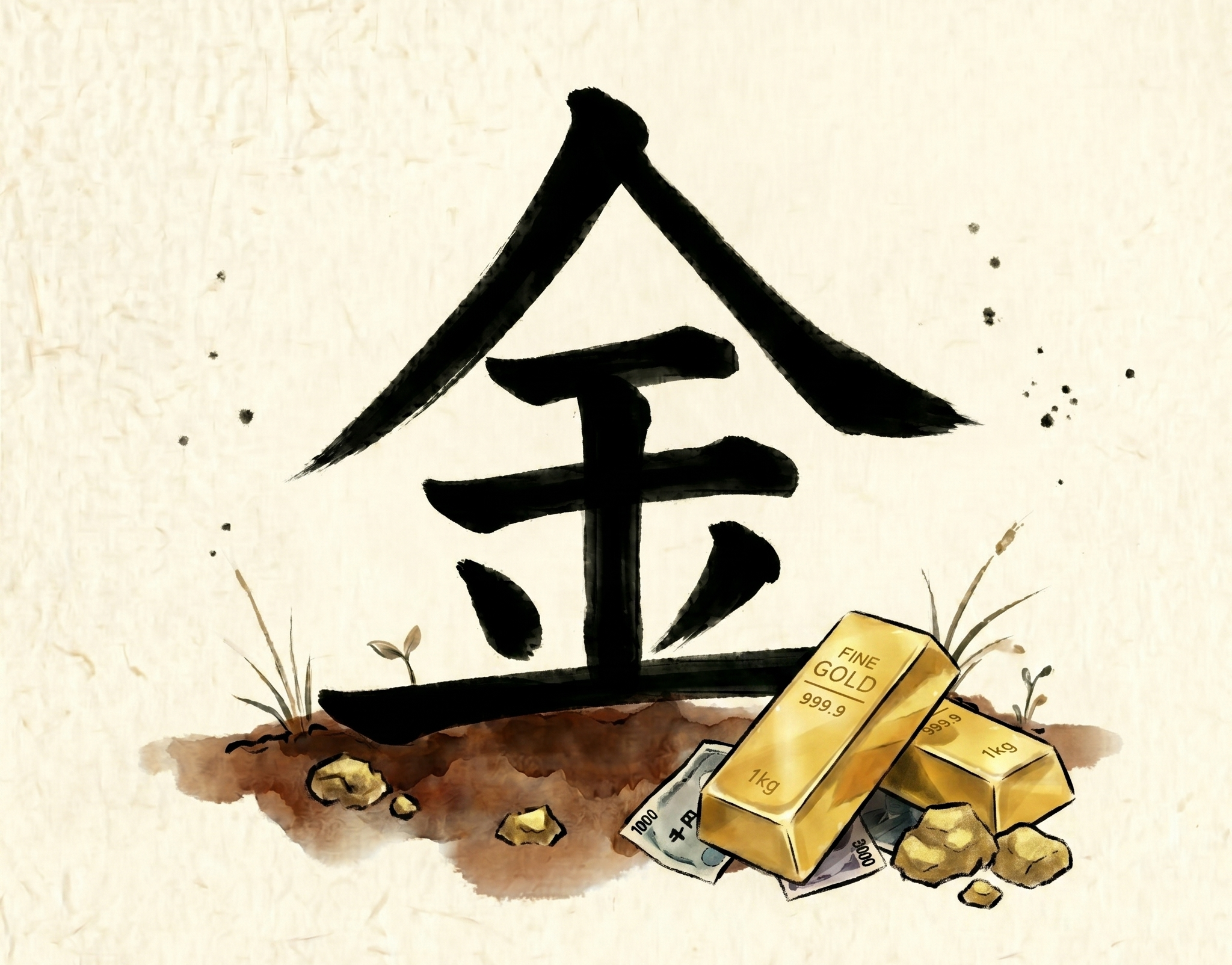 origin
Memory Hook
Picture gold nuggets (the two dots) inside the earth (土-like bottom). キン — sounds like "kin" (family, because gold runs in families!). かね = ka-ne, the clink of coins.
Writing Practice — tap to watch, trace, or quiz yourself
Touch Practice
Tap Watch to see the stroke order, or Practice to write 金 from memory.
Exercises
✦ Reading — write how to read the highlighted kanji
1
金ようびがすきですか。
Do you like Friday?
2
お金がありません。
I don't have any money.
✦ Writing — write the correct kanji in the blank
3
もちになりたいです。
I want to become rich.
4
タクシーのりょうはたかいです。
The taxi fee is expensive.
文化ノート
Cultural Note
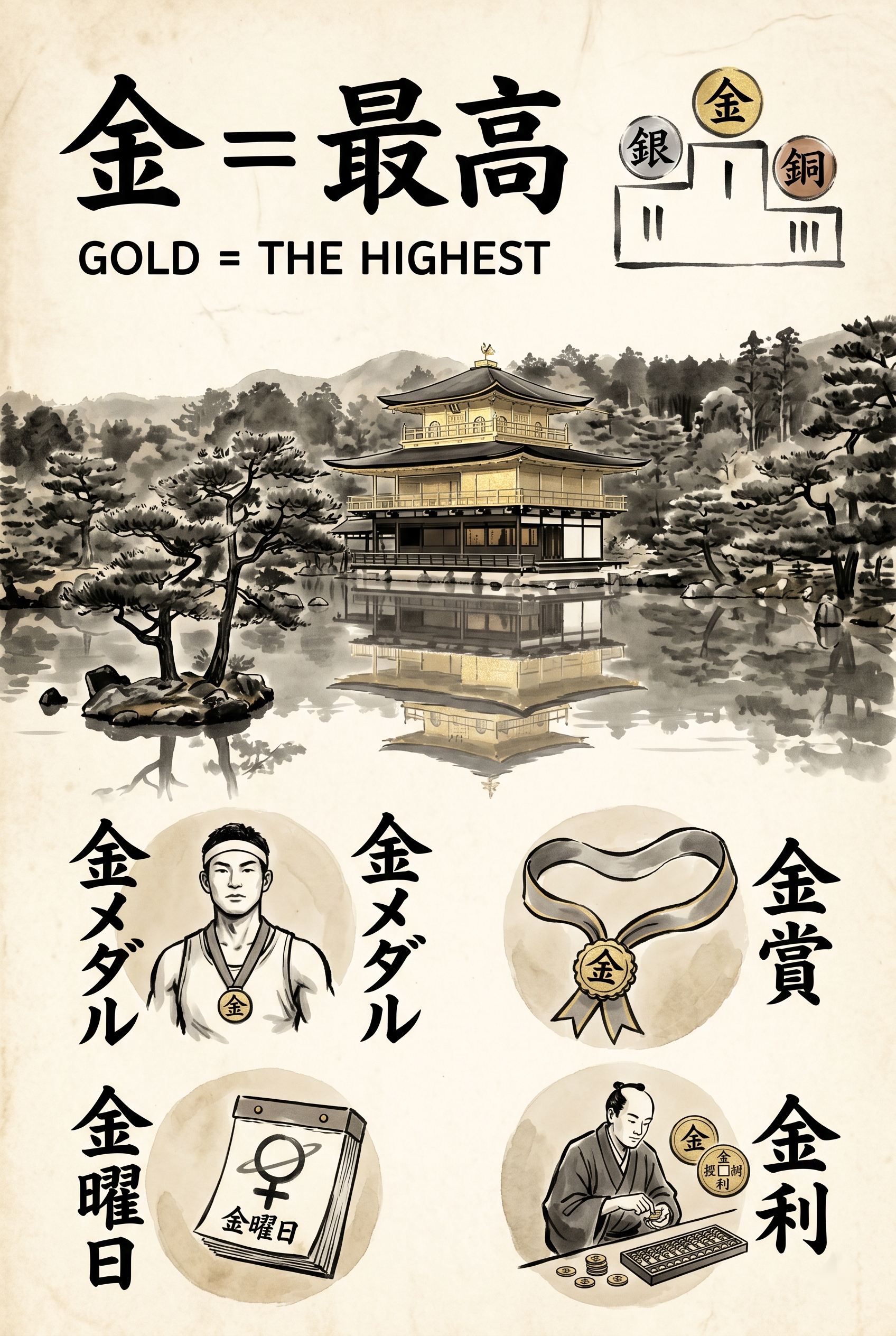
金 and the gold standard
金 marks the highest level in Japan: 金メダル (gold medal), 金賞 (gold prize), 金曜日 (Friday, named after Venus). Even 金利 (interest rate) literally means "gold profit."
きんメダル · gold medal
きんしょう · gold prize
きんり · interest
Native Speaker's NoteWhat your textbook won't tell you
①
キン vs コン vs かね — キン is the usual on-yomi (金曜日, 金属). コン is rare (金剛・こんごう, diamond-hard). かね is the kun-yomi for money or metal in everyday speech.✓ お金(かね) ✓ 金曜日(きんようび)
②
金 vs 全 — These two are almost twins — same top, same middle. The only difference? 金 (gold) has two little dots at the bottom, like two gold coins sitting underneath. 全 (all/complete) has nothing there — bare bottom! So whenever you spot those two bottom dots, that's your gold. No dots, no gold.金(dots ✓)≠ 全(no dots)
Ready to claim 金?
Tap below to save your progress and return to the index.
© JAPANAN · japananjapanesetutoring.com · Personal study use only
N5 Kanji · 金 · Sheet 9 of 11