JAPANAN 日本語
Native Speaker Kanji Series

4 strokes
水 (water)
Core Meaning
water
みず(名)
音読み On-yomi
スイ
- 水曜日すいようびWednesday
- 水道すいどうwaterworks
- 水田すいでんpaddy field
訓読み Kun-yomi
みず
- 水みずwater
- 水玉みずたまpolka dot / water drop
- 水着みずぎswimsuit
Etymology — pictographic origin
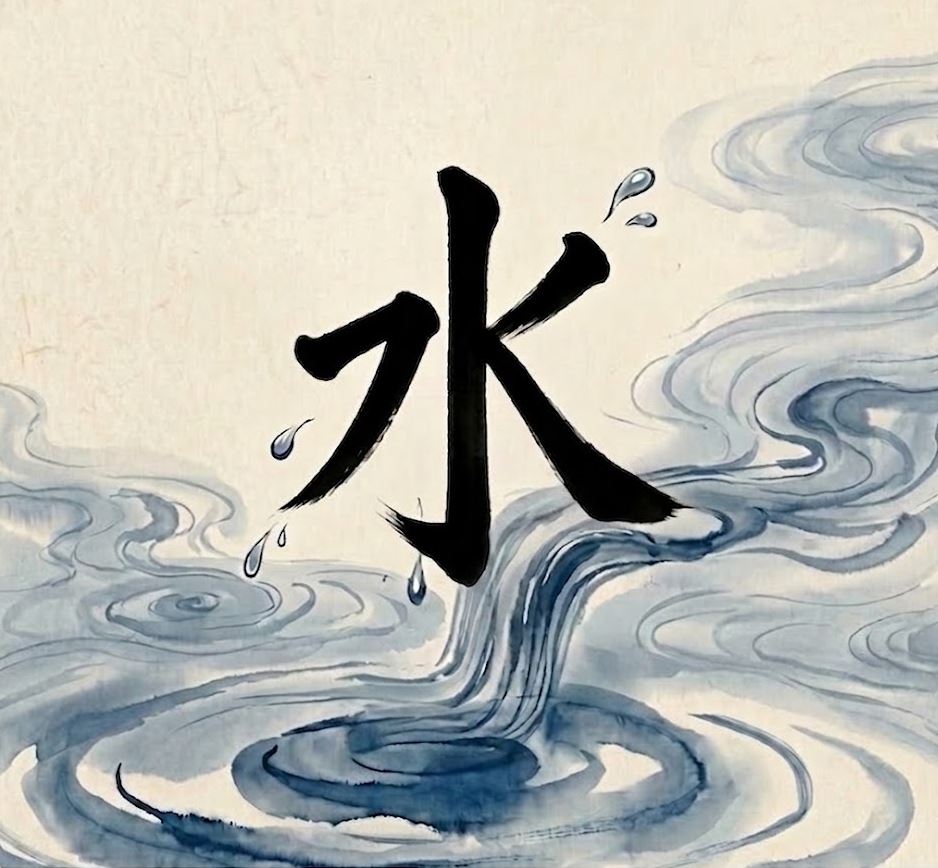 origin
Memory Hook
水 has a spine (the main stroke) with drops on each side. スイ — say it while miming splashing water! みず sounds wet and refreshing.
Writing Practice — tap to watch, trace, or quiz yourself
Touch Practice
Tap Watch to see the stroke order, or Practice to write 水 from memory.
Exercises
✦ Reading — write how to read the highlighted kanji
1
水道の水はきれいです。
The tap water is clean.
2
つめたい水をのみたいです。
I want to drink cold water.
✦ Writing — write the correct kanji in the blank
3
このはきれいです。
This water is clean.
4
ようびがっこうはやすみです。
School is closed on Wednesday.
文化ノート
Cultural Note
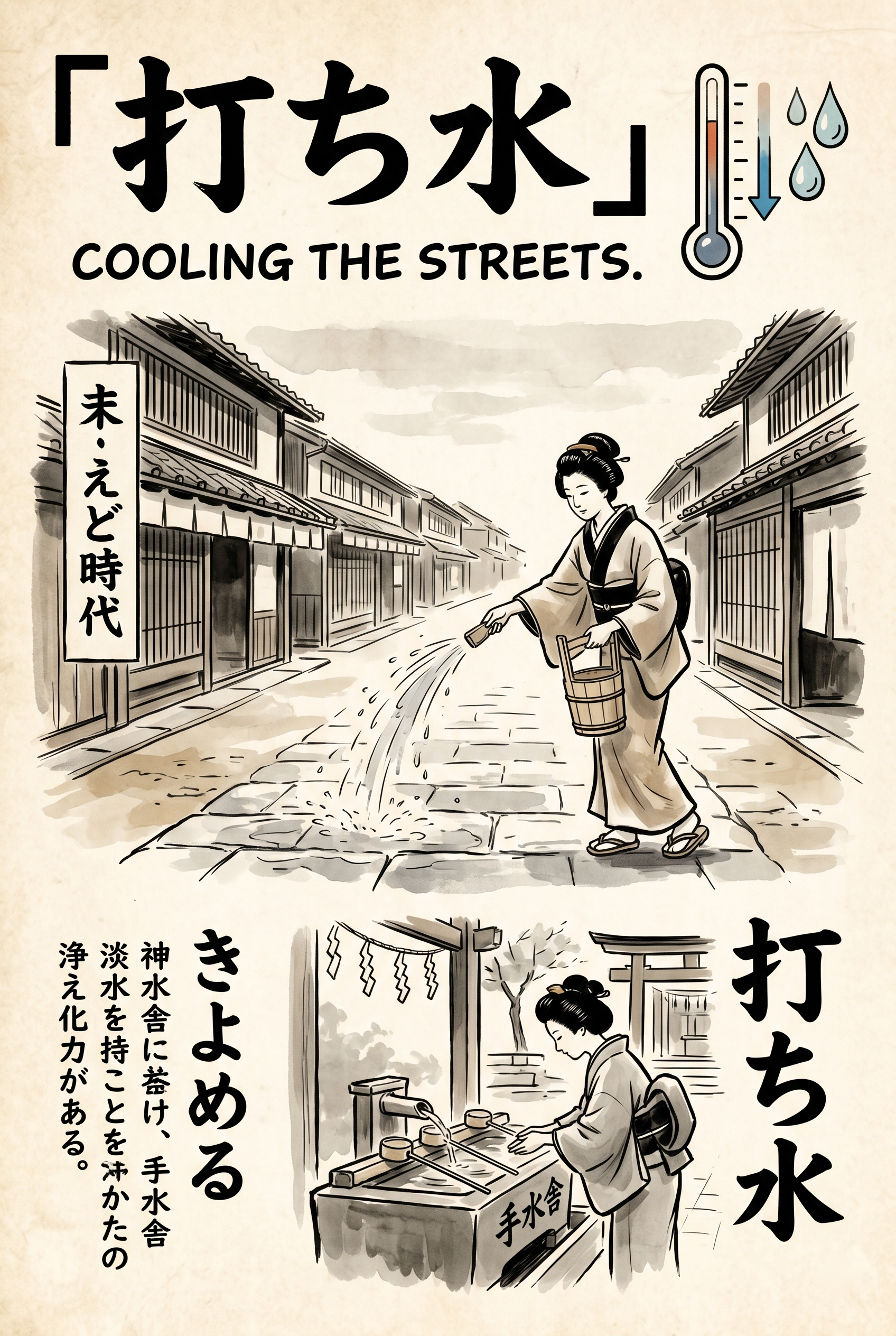
打ち水 — cooling the streets
打ち水 (うちみず) — sprinkling water on summer streets — is a 400-year-old Edo tradition still practiced today. It lowers pavement temperature by several degrees, rooted in Shinto purification.
うちみず
えどじだい · 400 years
すずむ・きよめる
Native Speaker's NoteWhat your textbook won't tell you
①
水 as a radical — When 水 appears on the left of a kanji, it becomes さんずい (氵 — 3 drops). You'll see it in: 海 (sea), 湖 (lake), 泳 (swim). Spot the three drops on the left!氵→ 海・湖・泳・流・洗
②
Wednesday = Water day — In Japanese, days of the week are named after the five elements + sun + moon: 月火水木金土日 (moon/fire/water/tree/gold/earth/sun). Water is Wednesday!げつ・か・すい・もく・きん・ど・にち
Ready to claim 水?
Tap below to save your progress and return to the index.
© JAPANAN · japananjapanesetutoring.com · Personal study use only
N5 Kanji · 水 · Sheet 7 of 11